Suicide Prevention in Our Muslim Community
Creating Community & Saving Lives
“And whoever saves one life, it is as if he had saved mankind entirely. Surah Al Ma’idah, 5:32”
“وَمَنْ أَحْيَاهَا فَكَأَنَّمَآ أَحْيَا ٱلنَّاسَ جَمِيعًۭا ۚ”

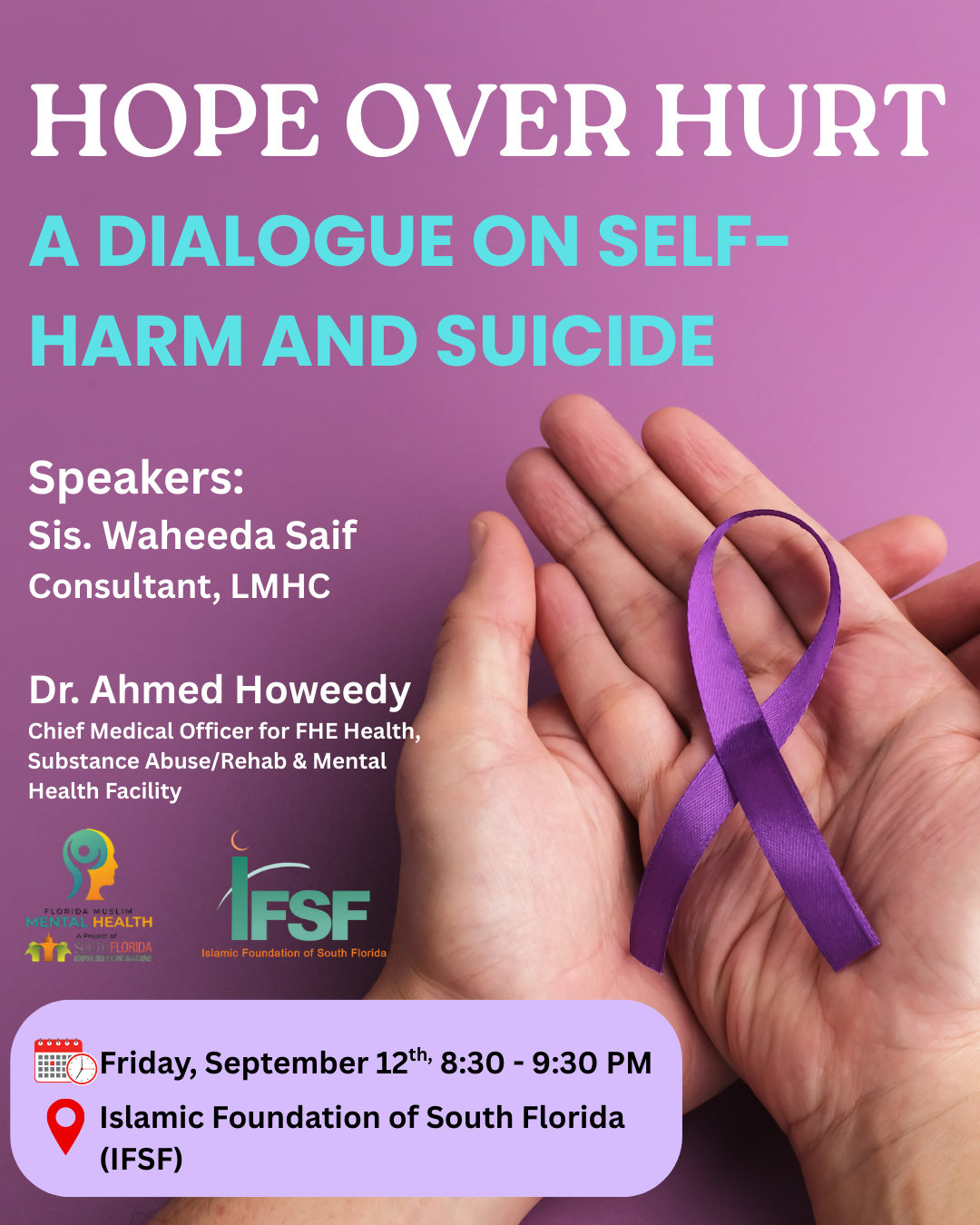
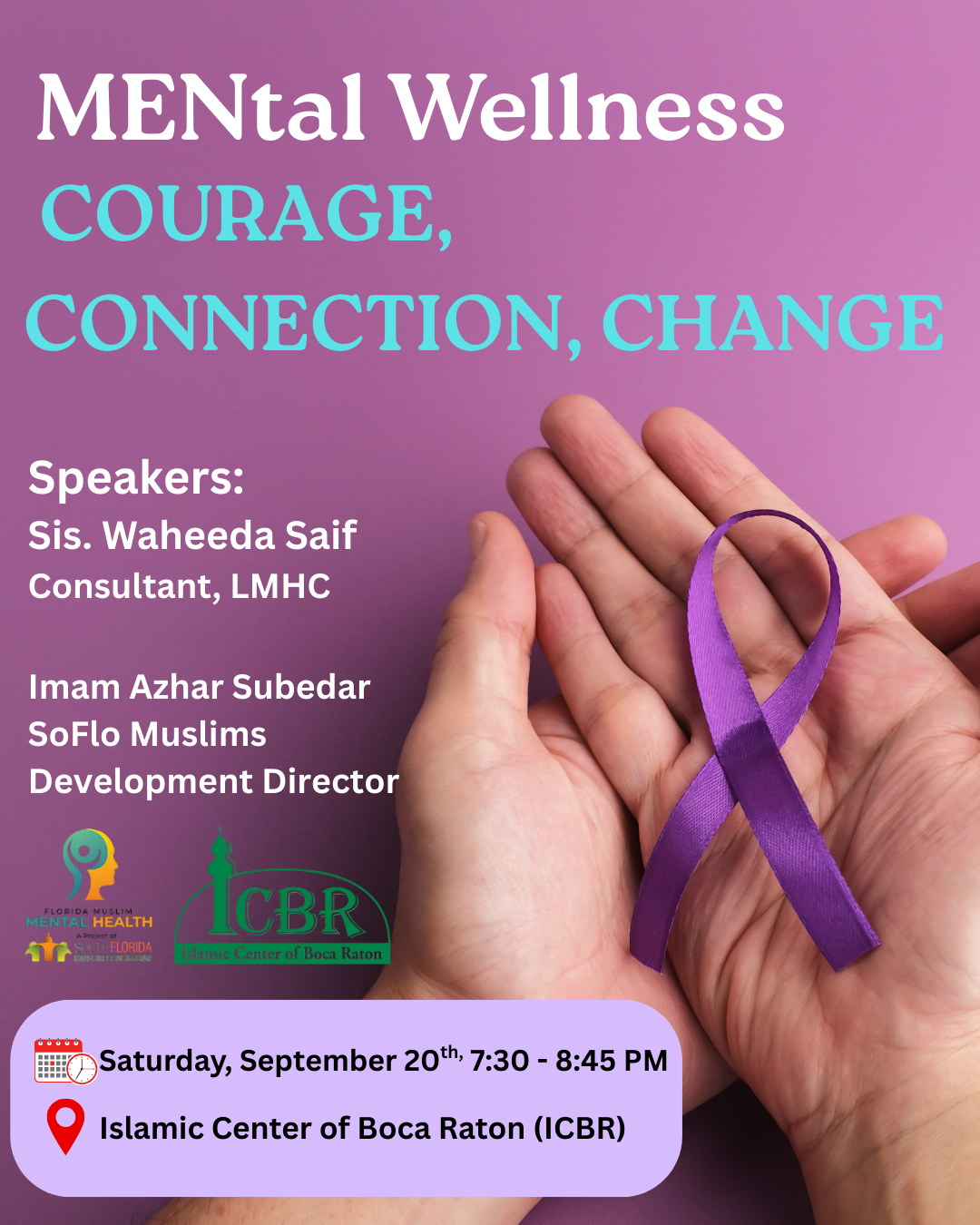
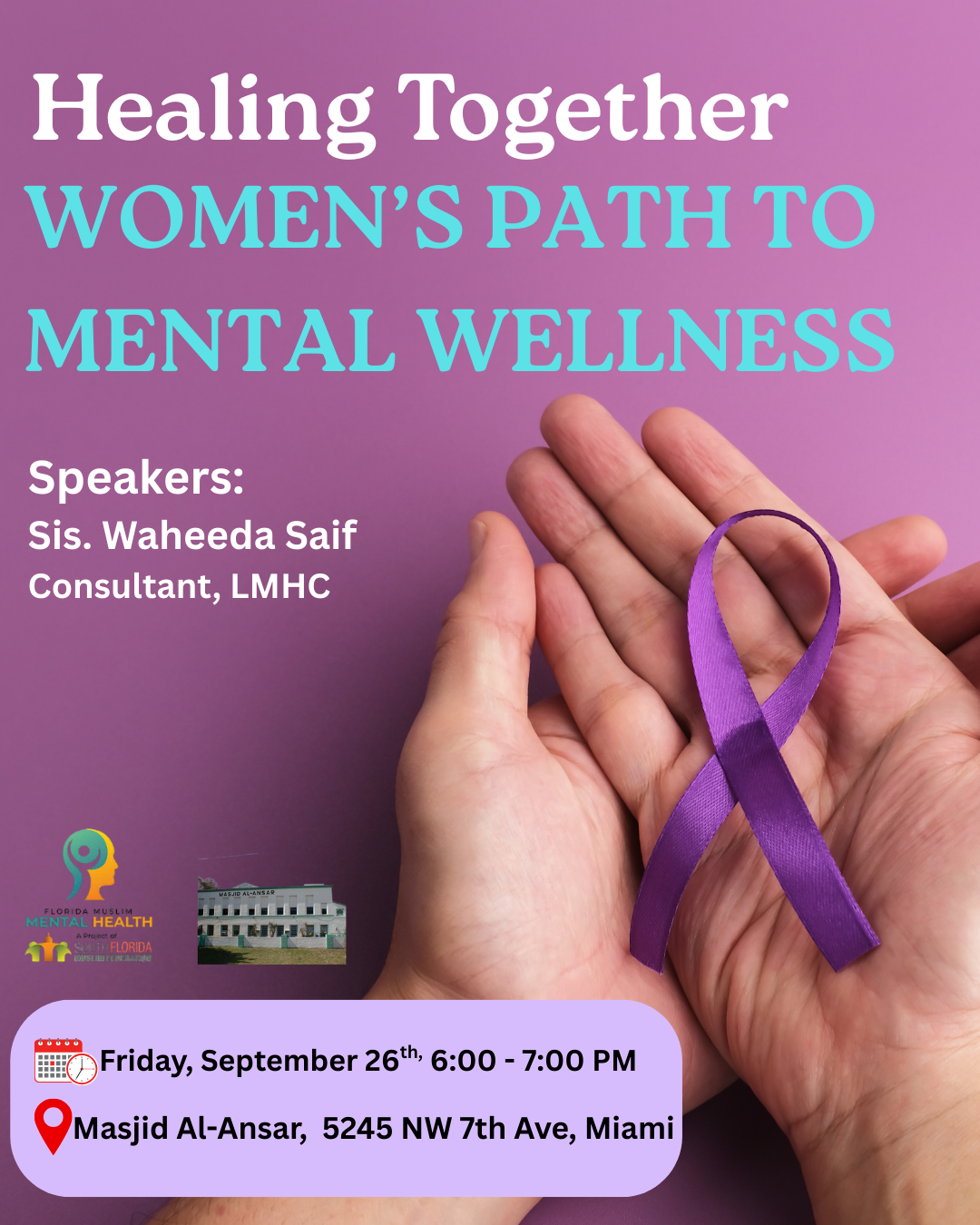
The Psychology of Suicidal Thinking and Why We Have Them

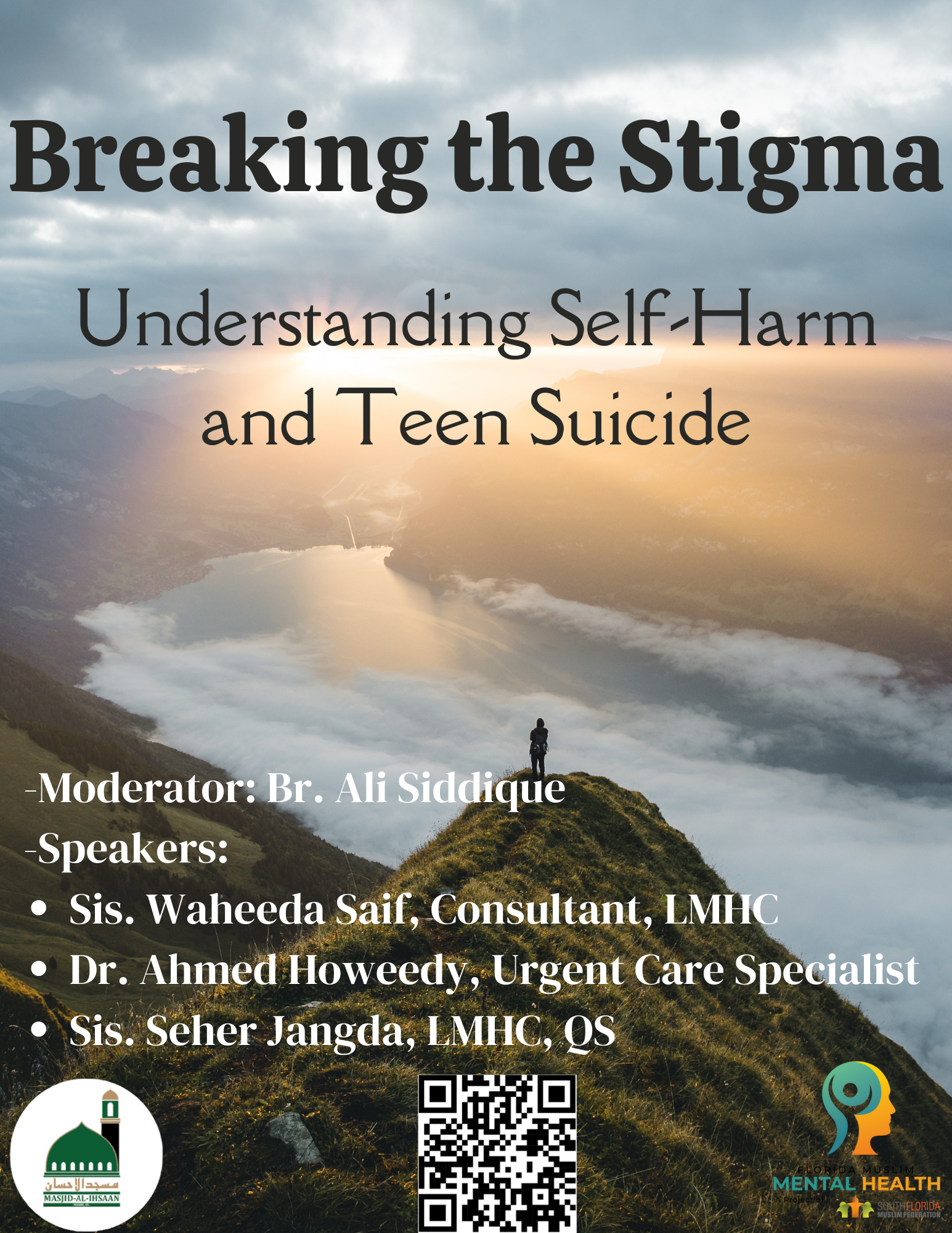



Important Suicide Prevention Resources
Special Messages from Br. Rameez
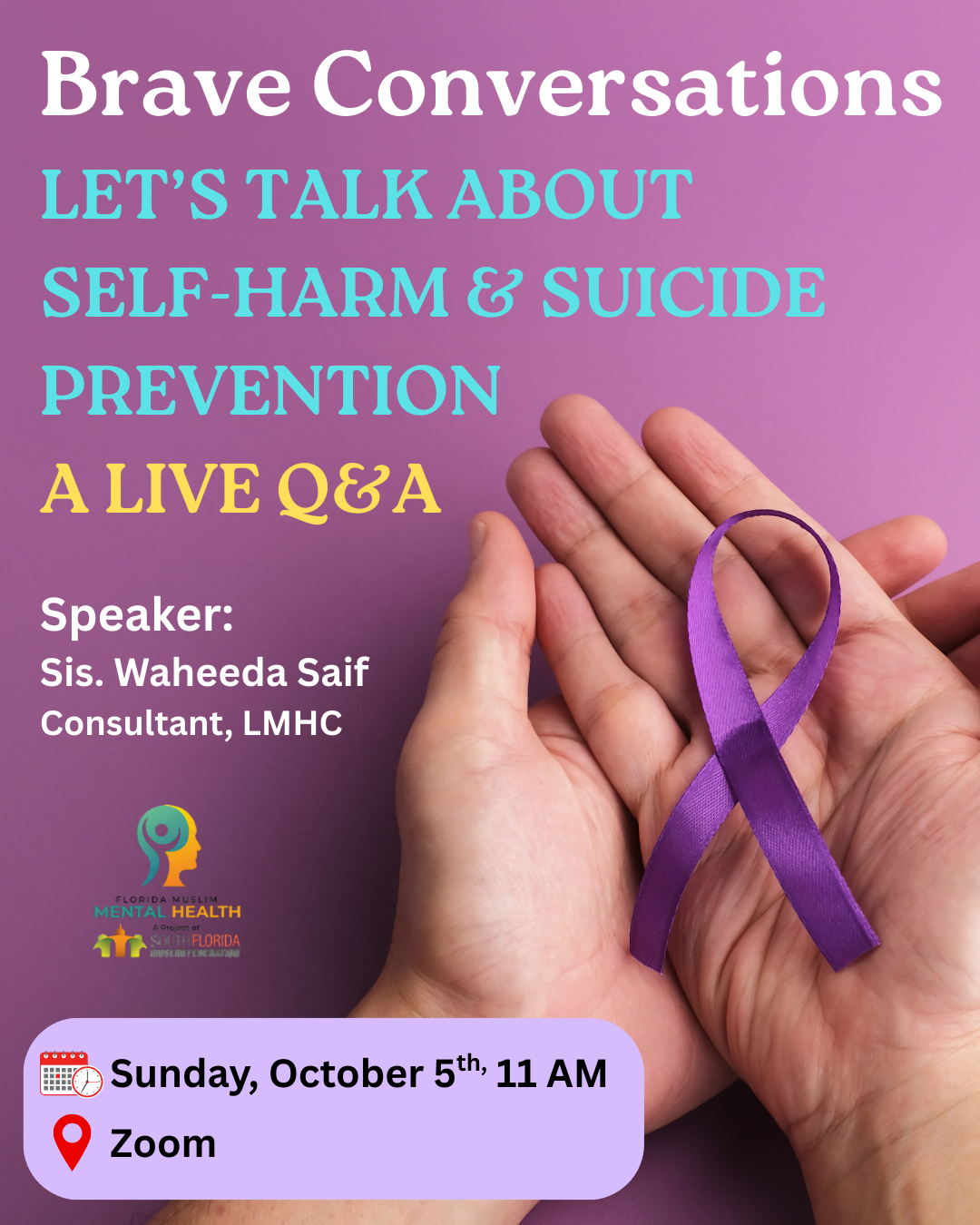
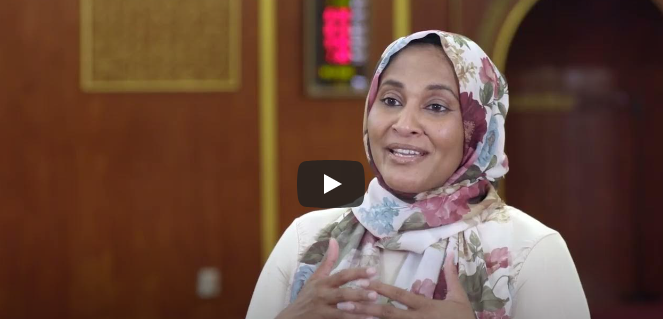
🌟 During our recent suicide prevention workshops, we received many powerful and heartfelt questions — and we want everyone to benefit from the answers.
We’re deeply grateful to Sisters Waheeda Saif and Aisha Bashir for recording this special webinar, where Sister Waheeda thoughtfully addresses those questions.
👉 Click here to watch the webinar.

What solutions do you recommend for my persistent suicidal thoughts and the overwhelming presence of vivid mental imagery depicting their aftermath as a pleasant scenario instead of a terrifying one?
There are a lot of reasons why someone might be having suicidal thoughts, and if there is no obvious reason why you are feeling this way (such as grief or loss), it is worth considering that there could be physical causes such as heavy metal poisoning. I would recommend seeking out medical or psychiatric assistance and seeing if they can help.

How can I provide support to my non-Muslim friend who constantly talks about suicide due to her inability to achieve good grades and her dissatisfaction with her family?
Main fact which you need to remind her is the fact of the great Mercy of God, which greater than any problem or hardship. Remembering the great Mercy of God brings helpless people to their senses and makes then start hoping and wishing to get anything from the Mercy of God.

What can we recite to ease the journey in the hereafter for the departed soul of a person who died by suicide?
Sura Al-Fatiha, Sura Yaseen, Sura Al-Mulk, Sura Arrahman and any Quranic Sura beside Sadaqa and Du’a for forgiveness.

How do we avoid thoughts of suïcide when struggling on certain issues
If you are struggling with continual suicidal thoughts, please seek professional help. Suicidal thoughts are a symptom of unresolved underlying issues. It is often helpful to work with a trained professional tackle the underlying issues. For active suicidal thoughts/crisis — don’t be alone — call someone (you dont have to tell them you’re suicidal). Even distraction works — anything to get your mind off the immediate suicidal thought patterns your mind is focused on. I hope this is helpful.

How do we address suicide due to gender concerns?
This is a great question, as it comes up many times in our communities, but is not talked about openly. Because of this being a sin in our religion, people are shunned in their families and communities, and are further ostrasized and stigmatized. No matter your beliefs, please consider not cutting ties with the family member who is struggling. People often due so in order to “save the religion/deen” of the individual. While is a noble cause, there is saving a person if they are dead (due to suicide). Suicide risk is higher amongst people who are struggling with gender issues, and whose famlies have cut them off. Please consider maintaining ties, even if you do not agree with them, so they are not isolated.
I will tend to believe that suicide among Muslims was not common long time before. should we not may be raise the kids to be tougher. To make them understand that life is unfair. You just gotta deal with whatever problem you have. Ask for help when you need it. May be I am being too simplistic or wrong here. Apologies.
No need to apologize. This is a valid question — did we have less suicides before? We have a lot of data — sadly, suicides have been trending up for many years — especially in youth. And especially in the Muslim youth. They simple live in a world that is different from ours. We didn’t have to contend withthe world they do: bullying in the age of social media, climate disasters; etc. I’m not saying our generations didnt have some incredible challenges — I’m just saying they’re challenges are different. And what we need to do is open up the conversation with them. When you say “make kids tougher” — you’re talking about building resilient kids — and we should absolutely being doing that — and there’s many ways to do that. One easy to do that is to that is to have conversations with them. Be curious. It starts young. Ask questions…it’s not always about asking “the suicide question”…it starts with “what’s going on in your life”. It starts young..
If it is Allah who heals us when sick then what do the antibiotics do?
In the study of aqeeda, we understand that everything in the universe is contingent, meaning dependent and needy. Everything is in need of something else, and ultimately all are in need of Allah. Imagine an elderly man who cannot hold himself up, and is need of leaning on another elderly man, who is in need of leaning on another elderly man. Each is in need of someone else. But none of them are actually holding up anyone, as they cannot hold up themselves, they all depend on someone at the end of the row who does not need anyone to hold themselves up. Similarly all apparent causes in this world, are all in need of something else, and actually don’t do anything themselves. They all depend on the one who needs no one else: Allah. So if someone is sick and takes an antibiotic, and then gets better, in reality the antibiotics did not heal the person. Allah created the illness, and Allah created the antibiotic, and then Allah created the Shifa. Allah created the association between antibiotics and Shifa. Meaning, when someone takes antibiotics, He often creates Shifa. But the antibiotic doesn’t do anything in itself. Sometimes Allah will break the association to show you He is the one who creates the causes and effects. Sometimes you may take the antibiotic but don’t get better,and sometimes you get better without the antibiotic. If someone touches fire, they will burn their hand. Did the fire burn the hand? In reality no. Allah created the fire, and created the burning, and created the association between placing your hand in the fire and the burning on your hand. Can there be a fire that doesn’t burn? Yes, as with Prophet Ibrahim. Can a person feel burning without fire? Yes, such is in neuropathy. So we understand an important part of our aqeedah, that Allah creates the causes and effects and the association between the two. That doesn’t mean not to take the means, as we are commanded to take the means, but at the same time we must understand the means don’t cause the effects, which means we must turn to Allah first and ask Him for the outcome we seek and then take the means. So when one is sick one must turn to Allah, ask for His Shifa, then take the means knowing the means don’t create the Shifa, but only Allah does. وَإِذَا مَرِضْتُ فَهُوَ يَشْفِينِ
Myths & Facts About Suicide
Visit the Mayo Clinic and California State University Northridge websites to learn more
MYTH: Mental and physical health are separate
FACT: Your mental health IS your physical health
MYTH: Suicide isn’t common
FACT: Every 40 seconds someone loses their life to suicide
MYTH: People who talk about suicide don’t do it
FACT: People talking about suicide may be reaching out for help or support. Take all threats seriously
MYTH: Talking about suicide increases the chance a person will act on it
FACT: Talking about suicide may reduce, rather than increase, suicidal ideation. It improves mental health-related outcomes and the likelihood that the person would seek treatment. Opening this conversation helps people find an alternative view of their existing circumstances. If someone is in crisis or depressed, asking if he or she is thinking about suicide can help, so don’t hesitate to start the conversation
MYTH: People who talk about suicide are just seeking attention
FACT: People who die from suicide have often told someone about not wanting to live anymore or they do not see the future. It’s always important to take seriously anybody who talks about
feeling suicidal. It’s important to be kind and sensitive, and ask direct questions such as: “Are you thinking about hurting yourself?” “Are you thinking about suicide?” or “Do you have access to weapons or things that can be used as weapons to harm yourself?”
MYTH: Suicide can’t be prevented
FACT: Suicide is preventable but unpredictable. Most people who contemplate suicide, often experience intense emotional pain, hopelessness and have a negative view of life or their futures. Suicide is a product of genes, mental health illnesses and environmental risk factors. Interventions targeted to treat psychiatric and substance use illnesses could save lives

MYTH: People who take their own lives are selfish, cowards or weak
FACT: People do not die of suicide by choice. Often, people who die of suicide experience significant emotional pain and find it difficult to consider different views or see a way out of their situation. Even though the reasons behind suicide are quite complex, frequently suicide is associated with psychiatric illnesses, such as depression, anxiety, bipolar disorder, schizophrenia and substance use

MYTH: Teenagers and college students are the most at risk for suicide
FACT: The suicide rate for this age group is below the national average, and suicide risk increases with age. The age group with the highest suicide rate in the U.S. is men and women between 45 and 64. Though particular groups may be at higher risk, suicide is a problem among all ages and groups
MYTH: Barriers to bridges, safe firearm storage and other actions to reduce access to lethal methods of suicide don’t work
FACT: Limiting access to lethal means, such as firearms, is one of the simplest strategies to decrease the chances of suicide. Many suicide attempts are a result of impulsive decisions. Therefore, separating someone from a lethal means could provide a person some time to think before doing harm to themselves

MYTH: Suicide always occurs without warning
FACT: There are almost always warning signs before a suicide attempt

MYTH: Only severely depressed people commit suicide; improvement in emotional state means lessened risk of suicide
FACT: Suicide often occurs at the end of a deep depression when a person’s spirits and energy level rise. Suicide requires a certain amount of energy that a severely depressed person may lack

MYTH: Suicide occurs in greatest numbers around Christmas and Thanksgiving
FACT: While depression is often greatest in numbers during the holiday season, suicide is actually highest during the spring months
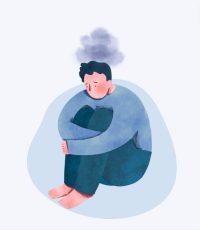
MYTH: Only crazy people commit suicide
FACT: Although most suicidal people are very unhappy, most suicidal acts are committed by people that aren’t characterized as psychotic. Thus, they are generally rational and in tough with reality. Seventy-five percent of those who commit suicide are, however, clinically depressed

MYTH: If a person committed suicide, his or her situation was probably so bad that death was the best solution
FACT: The life circumstances of suicidal individuals, while often bad, are survived by most people in similar circumstances. The perception of a difficult or challenging life circumstance is often more severe than the actual event

MYTH: People who really want to die will find a way; it won’t help to try and stop them
FACT: Most suicidal people are highly ambivalent (unsure) about suicide. They are torn between a desire to live and a desire to die
MYTH: The tendency toward suicide is inherited and passed from generation to generation
FACT: Since suicides often do run in families, the assumption is made that suicide is inherited. However, suicide often occurs in individuals with no family history of suicide

MYTH: One should not try to discuss suicide with depressed people. It might give them the idea or upset them enough to “push them over the edge.” The best thing to do is ignore it
FACT: Suicidal people are commonly greatly relieved to be able to talk about it

MYTH: The great majority of suicides are among minority groups in lower socioeconomic classes
FACT: More white, middle-class and affluent people commit suicide. However, suicide still crosses all racial/ethnic groups and classes
Explore Beautiful Islamic Dua and Dhikr Based on How You Feel
Visit the islamestic website to learn more